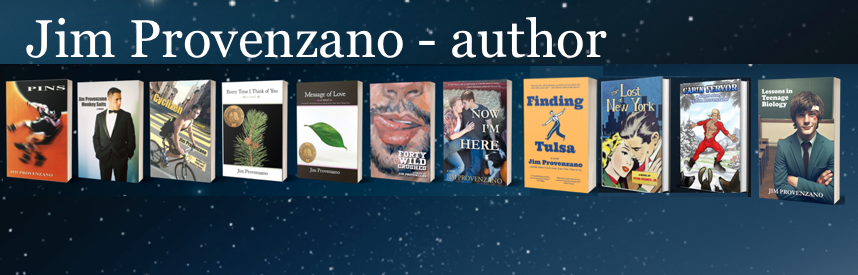
If you are an author, a publisher or even just a book fan, you may have heard about the controversy of digital piracy from no less than Meta a.k.a. Threads a.k.a. Facebook. Mark Zuckerberg seems to be happy to let robots all dig into pirated e-book copies of millions of books.
The whole process started with a scholarly aspect where professors and universities could share their papers. But The Atlantic recently exposed the fact that even fiction and nonfiction, memoir biography, books have all been called into the artificial intelligence brains that show them how to write in the style of other writers. I'm on that list.
This is just yet another evil tactic that Zuckerberg and the Meta tech bros have done and apparently gotten away with for now.
Many authors are talking about lawsuits and some suggest joining the Authors Guild. I was a member for several years and it was very helpful in several aspects of publishing. Sign up to protest here.
Unfortunately, with the class action lawsuits, one going back to 2023, there are so many authors involved that a payout would be minimal. But that's not exactly the point.
"Meta just lost a major fight in its ongoing legal battle
with a group of authors suing the company for copyright infringement
over how it trained its artificial intelligence models. Against the
company’s wishes, a court unredacted information alleging that Meta used
Library Genesis (LibGen), a notorious so-called shadow library of
pirated books that originated in Russia, to help train its generative AI
language models.
The case, Kadrey et al. v. Meta Platforms,
was one of the earliest copyright lawsuits filed against a tech company
over its AI training practices. Its outcome, along with those of dozens of similar cases
working their way through courts in the United States, will determine
whether technology companies can legally use creative works to train AI
moving forward and could either entrench AI’s most powerful players or
derail them."
You could also join the Copyright Alliance. I get their newsletters. They'll be probably doing some action or try to support authors in some way.
Author Lawrence Nault shares an expansive write-up on the situation, and what you can do.
This is part of my own ongoing hunt for pirated versions of my books. Readers have downloaded a PDF or a zip file and casually go through the book without reviewing it or giving anything back to the authors they stole from.
Check out my post from 2020 about the strange YouTube account that had hundreds of audiobooks, including one of mine, completely uploaded as videos. I still don't understand why this person or bot did it because there was no monetary value in doing it, but I single-handedly got it all shut down.
I'm certainly not gonna be able to take on the AI bots from Zuckerberg's Meta, I'm pretty disgusted to even post on Threads or Facebook these days.
I will try to keep up on it, and if you're an author, join the fight.
Prolific author, editor and publisher Felice Picano died March 12, at his home in Los Angeles. He was 81. The accolades and remembrances from people in the publishing industry we have poured in and are all across social media.
It's amazing how many lives Felice touched with his generosity by promoting and helping out other fledgling authors, including myself. My first ever blurb was from Felice for my 1999 debut novel PINS, which he called "a presently written novel of athletics and small town America."
He even helped me get my first agent who, despite failing to land me a publishing deal, spurred me on to continue and publish PINS myself.
Dozens of other authors, editors and poets have shared remembrances of his generosity and friendship. He was always interested, adventurous, and willing to help out others. He could also tell a story in person like few others (Warren Beatty at a gay circuit party?).
The late Ron Williams with Felice
Several of his books became major best sellers, including Like People in History, The Lure and many other books, as well as short stories, plays, and screenplays (He shared a few funny tales of script-doctoring gladiator movies).
When is best-selling books went out of print, he industriously found alternatives to republish them and gain back the rights of his books. Two of his books will soon be published posthumously as well.
As a founding member of the Violet Quill, Picano, Edmund White, Andrew Holleran, Robert Ferro and several other gay male authors formed writing circle in the 1970s and helped each other establish gay fiction as a valid genre of literature, mostly from a New York setting and perspective.
I first met Felice in New York City around 1989. We eventually shared an odd reading night at the now-closed Crowbar in the East Village. Felice read a short story and I read an overly long roman a clef story about working on a pumpkin farm.
2012 Philadelphia author gathering
Almost 30 years later, that story was woven into my novel Now I'm Here. By the time I finished my reading, however, Felice was the only person still awake. A lesson learned, and one of many that he taught; be brief and get to the point.
In the past decade or so, he would visit San Francisco from his new home in Los Angeles. I had the honor of sharing readings with him, introducing him at literary events, and generally just hanging out.
One particularly joyful gathering was in Philadelphia in advance of the 2012 Lambda Literary Awards in New York City. I was in town to attend the awards (my fourth novel, Every Time I Think of You would win a Lammy), and do research for my mostly Philly-set sequel, Message of Love.
After Felice is reading at Giovanni's Room, friends gathered for dinner in Philly's Little Italy, and it was perfect late afternoon of dining, sipping wine, talking shop and spending time with much more accomplished writers, including Tom Mendicino, the late Mark Merlis, and poet Jim Cory, who died last year.
Felice and me at The Broad Museum
When I booked a reading at Book Soup in West Hollywood for Now I'm Here in 2018, I was thrilled to have musician Dudley Saunders collaborate with me on that event. Not only did Felice show up, he also brought a few of his writing students from a class he was teaching at the nearby public library.
In 2019, when I visited my brother in Los Angeles for Christmas, we toured the Broad Museum and Chinatown with Felice, who also taught me that one could get around LA on the train system, which was a fun adventure.
Felice with author Wayne Hoffman 2012
Even up to his last years, although ailing, he was still cooking dinners for his friends and visitors in Los Angeles. I'm assuming that he has an executor who will keep his books alive and in print for as long as possible, at least as ebooks. I don't know what kind of memorials are going to be planned, but with so many friends and fans in multiple cities, it'll have to be more than one event.
"Finding Tulsa" is sexy, romantic, witty, engaging both cleverly current yet sweetly retrospective. It's Jim Provenzano's most complex and accomplished novel. He gets so much right and so evocatively about show business, from those school plays we all remember to Hollywood made-for-television movies, with delicious stops at boyhood Super8 movies and out-of-town gay porn shoots."
You can find other talks with Felice on YouTube as well. And check out his 2019 chat with Wayne Goodman on the Queer Words blog.
But of course, the best thing you can do is read his books. If you haven't already, there are some classics with intense human interaction, and no two books are alike because he was quite a masterful genre-hopper from memoir fiction to essays.
Listen to 'Now I'm Here' audiobook narrator Tim Curran and me discussing author-narrator collaboration, on House of Mystery Radio on NBC with cohosts Al Warren and Joe Goldberg.
Good news, everyone! (I love saying that. Dr. Farnsworth is so silly.)
Anyway, to get to the point, my sixth novel is now an audiobook, and you can listen to it on Audible. Veteran journalist Tim Curran is the narrator and I had a terrific time going through the book and making slight changes and sharing thoughts on understanding the characters to bring their voices to life. It's really been a great experience and Tim is an audiobook narrator whom I highly recommend.
On to the story, which you may know about by now, but I think I'll just share some of the press release below.
A passionate story of the love between a
Queen-inspired piano prodigy and a pumpkin farmer, author Jim Provenzano’s sixth novel, Now
I’m Here has been adapted as an audiobook narrated by Tim Curran, with a
November 15 release on Audible.
Now I’m Here is set in the small fictional town of Serene,
Ohio, in the 1970s and ’80s. Two boys from different families – Joshua, with
his stable middle-class home in town, and David, raised by his alcoholic and
abusive father on their isolated farm – discover, then lose, then find each
other again. Thirty years later, as the town’s history is slowly erased by
fading memories and encroaching suburbia, their childhood friend, Eric
Gottlund, tells the tale of their quiet heroism with poignancy and a sharp eye
for detail.
Narrator Tim Curran
Combining literature and music, the
author blends historic and contemporary topics. In Now I’m Here, two Southern Ohio teenage boys, Joshua Evans (a piano
prodigy) and David Koenig (a pumpkin farmer’s son) attend a Queen concert in
1978 on their first date. Their passionate affair grows into a life together
full of farming and concerts in their barn.
Joshua’s brief fame as a musician
includes an invitation to perform in a Los Angeles talent show. He also gains a
bit of notoriety by performing unusual solo versions of pop songs at West
Hollywood New Wave nightclubs of the early 1980s.
Fighting religious intolerance,
“rehabilitation therapy,” the lure of fame, and the heartbreak of AIDS, the two
boys grow into men before our eyes. Through their love of each other and of
rock’n’roll, the English rock band Queen in particular, Joshua and David
breathe life back into their home town, if only for a while.
San Francisco Examiner The British
rock group Queen –a touchstone of Provenzano’s adolescence– serves as muse,
role model and escape hatch for the rural Ohio teenagers at the center of Now I’m Here, a wrenching love story
that delves deep into the experience of growing up gay in heartland America
during the late 1970s.
The book and each of its chapters share
titles, and themes, with Queen songs. The lyrical prose and fine-grained detail of his novel are a far cry from
the jubilant bombast in the film’s trailer. Now
I’m Here offers flipside of a biopic, focusing not on celebrities’ lives,
but on the faraway lives of people they touched.
San Francisco Review of Books
“California author Jim Provenzano joins the great novelists who have written
important and lasting novels about men in love, and while he has won prizes for
his work it is now, with his publication of Now
I’m Here that he joins the ranks of the major authors who have had a
lasting imprint on our society and the LGBTIQ community.
“Words of admiration and appreciation fail the task of honoring this fine
novel. Provenzano knows this period, the highs and lows of two men in love
living in a world that simply could not or refused to understand their love.
The only entry point into the glow of this novel is by reading it at least once
– and probably more. It is a masterwork of the highest order.”
Edge Media Network “Joshua and David, the
brave couple brought to life in Jim Provenzano’s captivating, unforgettable
novel, Now I’m Here, manage to
experience a quintessential epic romance albeit in just a few short years. Were
it not for the admiring (and admittedly jealous) eye of their friend, Eric
Gottlund, who meticulously narrates this heartbreaking, breathtaking story, the
saga of Joshua and David could have easily gone unnoticed.
“This storytelling
method effectively and passionately conveys the lengthy, turbulent evolution of
their compelling, inspiring and uplifting relationship. The love story of
Joshua and David reminds the reader how to appreciate the extraordinary in the
ordinary. Professionally speaking, neither of these men achieves fame or
accomplishes anything especially newsworthy, but what they share emotionally is
nothing short of remarkable. Some books you read for laughter, intrigue, debate
or information. Now I’m Here makes
you feel.”
Out in Print “I’ve always marveled at the contradiction of hundreds
of thousands of mostly straight sports fans stomping their feet and clapping to
‘We Will Rock You’ as done by Queen, probably the gayest rock band in history
with the gayest front man ever. But whatever chord Queen struck, it resonates
to this day with both fans and authors. In his newest novel, Now I’m
Here, Jim Provenzano uses his knowledge as a fan and his skill as
an author to tell the story of two small-town Ohio boys.
“Joshua Lee Evans had a musical gift from the
beginning, and was fortunate enough to have parents who encouraged him to use
those talents. David Koenig lived on a pumpkin farm and had a hateful,
alcoholic father whose wife left him because of his temper and bad habits. It
was love at first fight. But the maturation of those feelings was a long road,
punctuated by music lessons and farm work. When it finally came together,
however, the boys knew what magic it was. A stupid school streaking stunt
(popular during the late ’70s and ’80s, when this takes place) puts David in a
‘rehabilitation’ camp for wayward youth courtesy of his father as Joshua leaves
town for the big time after graduation, a cover version of ‘Bohemian Rhapsody’
in his back pocket. They will come together again, rest assured, but even
reunions are fraught with frailty in this sweeping, epic romance.
“This story will confound your expectations. If
you’re looking for a Happy Ever After, however, forget it. And that’s fine with
me. Life does not always have happy endings, and sometimes we have to work to
find meaning when our characters are given a less-than-optimal finish.
“All this would mean nothing in the hands of a lesser
writer, but Provenzano has honed his craft and takes you on this dizzying ride
with the able assurance of a pro. His rendering of the mid-‘70s is deadly
accurate, and will bring a smile of remembrance to your face if you were coming
of age then. He never missteps or falls short of the mark emotionally, either.
The characters are all organic, built and embroidered on with well-chosen
detail.
“So, even if you’re not exactly a Queen
fan (and why not, I wonder?), you’ll enjoy this
supremely well-plotted and populated romance. Highly recommended.”