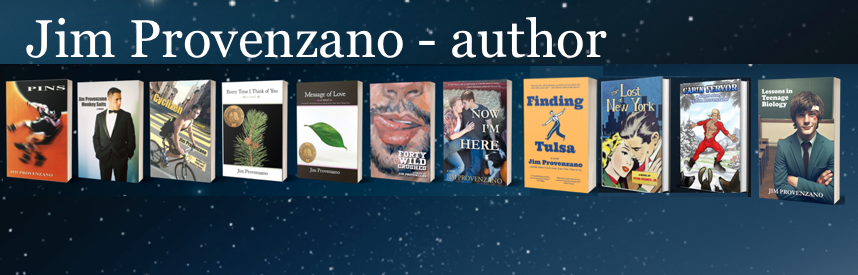
If you are an author, a publisher or even just a book fan, you may have heard about the controversy of digital piracy from no less than Meta a.k.a. Threads a.k.a. Facebook. Mark Zuckerberg seems to be happy to let robots all dig into pirated e-book copies of millions of books.
The whole process started with a scholarly aspect where professors and universities could share their papers. But The Atlantic recently exposed the fact that even fiction and nonfiction, memoir biography, books have all been called into the artificial intelligence brains that show them how to write in the style of other writers. I'm on that list.
This is just yet another evil tactic that Zuckerberg and the Meta tech bros have done and apparently gotten away with for now.
Many authors are talking about lawsuits and some suggest joining the Authors Guild. I was a member for several years and it was very helpful in several aspects of publishing. Sign up to protest here.
Unfortunately, with the class action lawsuits, one going back to 2023, there are so many authors involved that a payout would be minimal. But that's not exactly the point.
"Meta just lost a major fight in its ongoing legal battle
with a group of authors suing the company for copyright infringement
over how it trained its artificial intelligence models. Against the
company’s wishes, a court unredacted information alleging that Meta used
Library Genesis (LibGen), a notorious so-called shadow library of
pirated books that originated in Russia, to help train its generative AI
language models.
The case, Kadrey et al. v. Meta Platforms,
was one of the earliest copyright lawsuits filed against a tech company
over its AI training practices. Its outcome, along with those of dozens of similar cases
working their way through courts in the United States, will determine
whether technology companies can legally use creative works to train AI
moving forward and could either entrench AI’s most powerful players or
derail them."
You could also join the Copyright Alliance. I get their newsletters. They'll be probably doing some action or try to support authors in some way.
Author Lawrence Nault shares an expansive write-up on the situation, and what you can do.
This is part of my own ongoing hunt for pirated versions of my books. Readers have downloaded a PDF or a zip file and casually go through the book without reviewing it or giving anything back to the authors they stole from.
Check out my post from 2020 about the strange YouTube account that had hundreds of audiobooks, including one of mine, completely uploaded as videos. I still don't understand why this person or bot did it because there was no monetary value in doing it, but I single-handedly got it all shut down.
I'm certainly not gonna be able to take on the AI bots from Zuckerberg's Meta, I'm pretty disgusted to even post on Threads or Facebook these days.
I will try to keep up on it, and if you're an author, join the fight.
Prolific author, editor and publisher Felice Picano died March 12, at his home in Los Angeles. He was 81. The accolades and remembrances from people in the publishing industry we have poured in and are all across social media.
It's amazing how many lives Felice touched with his generosity by promoting and helping out other fledgling authors, including myself. My first ever blurb was from Felice for my 1999 debut novel PINS, which he called "a presently written novel of athletics and small town America."
He even helped me get my first agent who, despite failing to land me a publishing deal, spurred me on to continue and publish PINS myself.
Dozens of other authors, editors and poets have shared remembrances of his generosity and friendship. He was always interested, adventurous, and willing to help out others. He could also tell a story in person like few others (Warren Beatty at a gay circuit party?).
The late Ron Williams with Felice
Several of his books became major best sellers, including Like People in History, The Lure and many other books, as well as short stories, plays, and screenplays (He shared a few funny tales of script-doctoring gladiator movies).
When is best-selling books went out of print, he industriously found alternatives to republish them and gain back the rights of his books. Two of his books will soon be published posthumously as well.
As a founding member of the Violet Quill, Picano, Edmund White, Andrew Holleran, Robert Ferro and several other gay male authors formed writing circle in the 1970s and helped each other establish gay fiction as a valid genre of literature, mostly from a New York setting and perspective.
I first met Felice in New York City around 1989. We eventually shared an odd reading night at the now-closed Crowbar in the East Village. Felice read a short story and I read an overly long roman a clef story about working on a pumpkin farm.
2012 Philadelphia author gathering
Almost 30 years later, that story was woven into my novel Now I'm Here. By the time I finished my reading, however, Felice was the only person still awake. A lesson learned, and one of many that he taught; be brief and get to the point.
In the past decade or so, he would visit San Francisco from his new home in Los Angeles. I had the honor of sharing readings with him, introducing him at literary events, and generally just hanging out.
One particularly joyful gathering was in Philadelphia in advance of the 2012 Lambda Literary Awards in New York City. I was in town to attend the awards (my fourth novel, Every Time I Think of You would win a Lammy), and do research for my mostly Philly-set sequel, Message of Love.
After Felice is reading at Giovanni's Room, friends gathered for dinner in Philly's Little Italy, and it was perfect late afternoon of dining, sipping wine, talking shop and spending time with much more accomplished writers, including Tom Mendicino, the late Mark Merlis, and poet Jim Cory, who died last year.
Felice and me at The Broad Museum
When I booked a reading at Book Soup in West Hollywood for Now I'm Here in 2018, I was thrilled to have musician Dudley Saunders collaborate with me on that event. Not only did Felice show up, he also brought a few of his writing students from a class he was teaching at the nearby public library.
In 2019, when I visited my brother in Los Angeles for Christmas, we toured the Broad Museum and Chinatown with Felice, who also taught me that one could get around LA on the train system, which was a fun adventure.
Felice with author Wayne Hoffman 2012
Even up to his last years, although ailing, he was still cooking dinners for his friends and visitors in Los Angeles. I'm assuming that he has an executor who will keep his books alive and in print for as long as possible, at least as ebooks. I don't know what kind of memorials are going to be planned, but with so many friends and fans in multiple cities, it'll have to be more than one event.
"Finding Tulsa" is sexy, romantic, witty, engaging both cleverly current yet sweetly retrospective. It's Jim Provenzano's most complex and accomplished novel. He gets so much right and so evocatively about show business, from those school plays we all remember to Hollywood made-for-television movies, with delicious stops at boyhood Super8 movies and out-of-town gay porn shoots."
You can find other talks with Felice on YouTube as well. And check out his 2019 chat with Wayne Goodman on the Queer Words blog.
But of course, the best thing you can do is read his books. If you haven't already, there are some classics with intense human interaction, and no two books are alike because he was quite a masterful genre-hopper from memoir fiction to essays.
Good news, everyone! (I love saying that. Dr. Farnsworth is so silly.)
Anyway, to get to the point, my sixth novel is now an audiobook, and you can listen to it on Audible. Veteran journalist Tim Curran is the narrator and I had a terrific time going through the book and making slight changes and sharing thoughts on understanding the characters to bring their voices to life. It's really been a great experience and Tim is an audiobook narrator whom I highly recommend.
On to the story, which you may know about by now, but I think I'll just share some of the press release below.
A passionate story of the love between a
Queen-inspired piano prodigy and a pumpkin farmer, author Jim Provenzano’s sixth novel, Now
I’m Here has been adapted as an audiobook narrated by Tim Curran, with a
November 15 release on Audible.
Now I’m Here is set in the small fictional town of Serene,
Ohio, in the 1970s and ’80s. Two boys from different families – Joshua, with
his stable middle-class home in town, and David, raised by his alcoholic and
abusive father on their isolated farm – discover, then lose, then find each
other again. Thirty years later, as the town’s history is slowly erased by
fading memories and encroaching suburbia, their childhood friend, Eric
Gottlund, tells the tale of their quiet heroism with poignancy and a sharp eye
for detail.
Narrator Tim Curran
Combining literature and music, the
author blends historic and contemporary topics. In Now I’m Here, two Southern Ohio teenage boys, Joshua Evans (a piano
prodigy) and David Koenig (a pumpkin farmer’s son) attend a Queen concert in
1978 on their first date. Their passionate affair grows into a life together
full of farming and concerts in their barn.
Joshua’s brief fame as a musician
includes an invitation to perform in a Los Angeles talent show. He also gains a
bit of notoriety by performing unusual solo versions of pop songs at West
Hollywood New Wave nightclubs of the early 1980s.
Fighting religious intolerance,
“rehabilitation therapy,” the lure of fame, and the heartbreak of AIDS, the two
boys grow into men before our eyes. Through their love of each other and of
rock’n’roll, the English rock band Queen in particular, Joshua and David
breathe life back into their home town, if only for a while.
San Francisco Examiner The British
rock group Queen –a touchstone of Provenzano’s adolescence– serves as muse,
role model and escape hatch for the rural Ohio teenagers at the center of Now I’m Here, a wrenching love story
that delves deep into the experience of growing up gay in heartland America
during the late 1970s.
The book and each of its chapters share
titles, and themes, with Queen songs. The lyrical prose and fine-grained detail of his novel are a far cry from
the jubilant bombast in the film’s trailer. Now
I’m Here offers flipside of a biopic, focusing not on celebrities’ lives,
but on the faraway lives of people they touched.
San Francisco Review of Books
“California author Jim Provenzano joins the great novelists who have written
important and lasting novels about men in love, and while he has won prizes for
his work it is now, with his publication of Now
I’m Here that he joins the ranks of the major authors who have had a
lasting imprint on our society and the LGBTIQ community.
“Words of admiration and appreciation fail the task of honoring this fine
novel. Provenzano knows this period, the highs and lows of two men in love
living in a world that simply could not or refused to understand their love.
The only entry point into the glow of this novel is by reading it at least once
– and probably more. It is a masterwork of the highest order.”
Edge Media Network “Joshua and David, the
brave couple brought to life in Jim Provenzano’s captivating, unforgettable
novel, Now I’m Here, manage to
experience a quintessential epic romance albeit in just a few short years. Were
it not for the admiring (and admittedly jealous) eye of their friend, Eric
Gottlund, who meticulously narrates this heartbreaking, breathtaking story, the
saga of Joshua and David could have easily gone unnoticed.
“This storytelling
method effectively and passionately conveys the lengthy, turbulent evolution of
their compelling, inspiring and uplifting relationship. The love story of
Joshua and David reminds the reader how to appreciate the extraordinary in the
ordinary. Professionally speaking, neither of these men achieves fame or
accomplishes anything especially newsworthy, but what they share emotionally is
nothing short of remarkable. Some books you read for laughter, intrigue, debate
or information. Now I’m Here makes
you feel.”
Out in Print “I’ve always marveled at the contradiction of hundreds
of thousands of mostly straight sports fans stomping their feet and clapping to
‘We Will Rock You’ as done by Queen, probably the gayest rock band in history
with the gayest front man ever. But whatever chord Queen struck, it resonates
to this day with both fans and authors. In his newest novel, Now I’m
Here, Jim Provenzano uses his knowledge as a fan and his skill as
an author to tell the story of two small-town Ohio boys.
“Joshua Lee Evans had a musical gift from the
beginning, and was fortunate enough to have parents who encouraged him to use
those talents. David Koenig lived on a pumpkin farm and had a hateful,
alcoholic father whose wife left him because of his temper and bad habits. It
was love at first fight. But the maturation of those feelings was a long road,
punctuated by music lessons and farm work. When it finally came together,
however, the boys knew what magic it was. A stupid school streaking stunt
(popular during the late ’70s and ’80s, when this takes place) puts David in a
‘rehabilitation’ camp for wayward youth courtesy of his father as Joshua leaves
town for the big time after graduation, a cover version of ‘Bohemian Rhapsody’
in his back pocket. They will come together again, rest assured, but even
reunions are fraught with frailty in this sweeping, epic romance.
“This story will confound your expectations. If
you’re looking for a Happy Ever After, however, forget it. And that’s fine with
me. Life does not always have happy endings, and sometimes we have to work to
find meaning when our characters are given a less-than-optimal finish.
“All this would mean nothing in the hands of a lesser
writer, but Provenzano has honed his craft and takes you on this dizzying ride
with the able assurance of a pro. His rendering of the mid-‘70s is deadly
accurate, and will bring a smile of remembrance to your face if you were coming
of age then. He never missteps or falls short of the mark emotionally, either.
The characters are all organic, built and embroidered on with well-chosen
detail.
“So, even if you’re not exactly a Queen
fan (and why not, I wonder?), you’ll enjoy this
supremely well-plotted and populated romance. Highly recommended.”
my new novella, out May 6 (Kindle) and June 1 (paperback)
A lot can happen in two days. For Tom Mollicelli, passing
out in gym class, being saved from a bully by his sister, getting drunk at a
party, going camping with his straight crush, and almost ditching a speech
tournament, all lead up to his first kiss from a guy.
Set in a small Ohio town
at the peak of the 1970s, Lessons in Teenage Biology offers a searingly
honest depiction of a gay youth struggling to just get through another day or
two.
“Provenzano’s gift for recreating the
mindset of the American teen boy is such that this fairly typical story of a
fairly typical lovelorn high school boy never falls into cliché. Most readers –
queer or otherwise – will identify on some level with the adolescent angst, and
revel in the sweet conclusion of this story.”
– Larry Duplechan, author of Blackbird
and Movies That Made Me Gay
“Lessons in Teenage Biology is a delightful journey
back to a small Ohio town in the late 1970s. And it enveloped my attention
right away. That was my upbringing, though mine was years earlier and his
classmates were more hip and aware than mine. Through Tom, we hear his thoughts
about friends and high school classmates and imagined gay partners, as he
navigates a world of trying to fit in, to not stick out, and to still be
himself.”
– JD Doyle, author of 1981: My Gay American Road Trip
Lambda Literary Award-winning novelist Jim Provenzano brings a swift wit to
his latest story, which is actually his first. Hand-typed on a manual
typewriter in 1986, the author of seven subsequent novels and other works
recently rediscovered his early novella in a box of documents, then scanned and
converted the pages. While expanding the story, he retained its sense of urgent
eccentricity. While fitting for the Young Adult genre, Tom’s wild two days, a
somewhat autobiographical coming of age tale, will spark a nostalgic light for
readers who remember teen life in the 1970s.
I finally completed the trailer for my late uncle, John Rigney Jr.'s novel, "The Lost of New York." Yes, it was published in May 2022, but as the saying goes, better late than never.
In putting it all together, I realized there was a vast difference between my uncle's ability to hand-type his novel, as well as other stories, never knowing if they'd ever be published. Compare that to my spending a few hours on an upgraded video editing application to try to capture the tone and spirit of his book. This is after spending months scanning, editing and twice formatting it in book form!
If you didn't know the background of this book, you can read more on my website, which talks more about uncle Butch's story, and how he managed to assemble a novel, a few short stories, and parts of an incomplete novel. At the time he was dealing with drug addiction, unemployment, and being apparently shipped off to Alaska for a government job in lieu of a federal prison sentence.
So how did he manage to save all these pages with no such thing as a photocopier in the late 1950s and early '60s? He must've held onto it dearly. Did he own a typewriter? I don't know how he managed to do all this. His history is kind of lost, other than stories from my mother, and remembrances of repeated stories via my brother.
But his sheer determination is what inspires me. I'm pretty sure that the writing instinct comes from my mother's side of the family, although Uncle Butch was the only one who actually got this far. The fact that he'll never know that I actually ended up publishing his book –and made a few editorial changes, but basically tried to get the spirit of it and clean it up a lot– might amuse him.
In putting together the trailer, I was noting how technological advances have made it so much easier to put together a book and promote it. I'm part of the last generation that spans these two eras, the hand-typed manuscript, which I actually did a few times before I had a computer in the 1980s, to the now-commonplace ebook and audiobook. And then we have artificial intelligence that's basically rewriting books in a bootleg style and robots are selling them online.
For my technological advances over the years, I've had to make changes and adjustments and adapt. I have a website. I have a blog. I have social media. I've made video trailers for almost all of my books, because I can. Also, I learned all these skills after literary agents failed me, and publishers ghosted me, or were occasionally polite enough to reply with a 'No thanks.'
For Christmas, I bought myself a new Macintosh Mini after 11 years of dealing with an old one from work that was sluggish, but functional. So when I bought the new computer, I knew there would be a lot of changes to make. Specifically the video editing software, which is terrific (Filmora Wondershare; not a plug, but it actually works.
Oh, I also composed the music! I did a lot of that back in the 1980s, and fortunately the song I use totally fits the mood of Butch's book. When I composed and recorded it, we used cassette tapes, kids. The internet was not widely used by the public, and Uncle Butch manuscript sat hidden in a box in my parents' house in the attic.
Anyway, there are a lot of adjustments to make the basic things; moving text, old video, as well as lots of new doodads and ways to move things around. So it's a good thing that I waited to make this trailer, because there were certain things I wanted to do that we're unable to do in the previous version. And in Uncle Butch's time, I don't think there was any kind of book trailer.
The downside is that with the new computer, I forgot to export my bookmarks, so my passwords for virtually every single website that I use had to be updated and changed and verified, along all that other baloney that goes along with 21st-century technology.
Not that I'm complaining. Thanks for double-checking to make sure it's actually me doing this blog post, Google!
As I share my new book trailer on the Internet, perhaps even boost it on social media here and there, I'm happy that I was able to actually get this done. I've actually made a few hundred dollars off of Uncle Butch, so thanks for that. It's basically paid for the cost of publishing, etc. Mostly, it's libraries that have purchased it, another advancement that would make Uncle Butch proud.
I encourage you to give it a try. In paperback or e-book, it's a bargain because it's an archival document of lost era in our history, specifically, New York history and that of my family.
Dink: “Welcome to the Orange and Black.” Joey: “Huh?” Dink: “It’s always Halloween.”
That’s one of my favorite lines from my debut novel PINS and this week –actually last month– is the 23rd anniversary of its publication. It’s not a very auspicious anniversary except to say that I should’ve posted this before Halloween, but I didn’t.
Holidays and all are good for annual reminders. But I’ve been really busy.
The reason Dink’s remark is one my favorite lines is because it’s multilayered. Dink is warning Joey, new to his also new school’s wrestling team, that he needs to prepare for the pressure and actual pain of training, to put on a mask to hide it, and cryptically, to hide being gay, which Dink intuits, because he is as well.
But it also has a secret autobiographical color code that means more to me.
You see, in high school, our school colors were also orange and black.
I didn't use the same mascot because of our high school mascot was an inanimate object; an arrow.
We did have a human mascot; Arry the Arrow. For pep rallies and football games, a girl from the cheer squad would play Arry with a big papier-mâché head, Sometimes a guy would do it, too. We used to have T-shirts with his illustration version resembling a little Mighty Mouse-style flying superhero.
But the arrow symbol was derived from the fact that in Northern Ohio, particularly near burial mounds, one used to be able to randomly find arrowheads sculpted from rock. Obviously now that you think about it, it’s a bit of cultural appropriation, but what mascot isn’t? Our junior high version was The Darts. The Arrows even made a list of problematic/racist mascots.
Of course, if you read the book PINS, you know that there’s a religious allegory in it that has a parallel to the tale of Saint Sebastian. I could’ve use the arrows as a symbol or a mascot in the book but it would’ve been overkill, with Joey/St. Sebastian being stuck with arrows metaphorically by his numerous wrestling injuries.
Besides, back in the new internet area, and even with the help of some history books, I didn’t find references to arrowheads as easily discovered in suburban New Jersey, despite the abundance of cities and towns with First Nation terms.
Instead I chose horses; colts in particular, because that was another symbol of animal symbol that runs throughout the book. These are all things that I don't care if you notice or appreciate or understand. They’re merely aspects woven into the book over the nine years it took me to complete it.
It’s the same for the holiday moment of November 1; All Saints Day, which is the actual date where the book starts. Everything before in Chapter 1 is past/previous tense by the mysterious unnamed narrator. The action actually begins on November 1, near the Day of the Dead for some Latino cultures.
I’m reminded of all this, because a few weeks ago I hosted the 12th –or 13th?– Lit Crawl event at Martuni’s, a bar in San Francisco where I’ve hosted Litquake events for a dozen years or so. I’ve lost track of how long it's been.
Anyway, I decided that I and the other authors would do book giveaways for trivia questions, mostly because I still have a box or two of PINS in my basement and I really want to get rid of them.
I’ve tried hand-selling them for cheap. I even went back on eBay for a while but that's tiresome. Since I closed my DBA Myrmidude Press, I can't reconnect with wholesale distributors because they’re not interested in a 23-year-old book that’s already sold more than 5500 copies. So basically, according to Baker and Taylor and Ingram, my book is out-of-print.
But it’s not; if you want a free copy just mail me the postage, I guess. It would be great if some smart literature professor added it to their syllabus, then I could ship an entire box, which I did several times years back.
One of the curses of self-publishing old school-style is that, when you print out 6000 copies, you do end up having some leftovers. But after that, print on demand led to an easier formatting and I don't have boxes of other books lying in wait.
There are so many newfangled ways of getting a book out that first-time self-published authors can access. I’m a bit envious actually of their naïveté and not understanding how the old school formatting works; hiring a printer, shipping cartons by UPS, etc. I’ve described that elsewhere in other posts.
But even six books later –actually seven including the short story anthology, and three audiobooks and a play make a lucky 13, and the German translation of PINS makes 14– I still get people who tag me with the wrestling badge of honor.
I recently posted an old Halloween picture of me as Wolverine from the X-Men movies. I even sported it at a Philadelphia literary conference in 2000 when I was coasting on PINS’ success.
Yet just today some literary friend had to make a wrestling comparison as if I'm still running around in the singlet at age 60. I’m not embarrassed by my age. It’s in my Wikipedia entry. (Truth: the last time I wore a singlet for actual competition was 2006, other than a later Halloween costume as a wrestler/werewolf.)
But to still be tagged by something you completed more than two decades ago is a bit limiting. I still have people who complement me on that book, but haven’t read any of the others, which is a bit frustrating.
So, please read this book and then maybe the six or seven others I’ve cranked out over the years. I hope you had a happy Halloween and you have a nice autumn and I hope to post more frequently in the future now that I’ve discovered the magic of voice-to-text. And buy my damn books, bub!
Lambda Literary Award winner and
finalist, Every Time I Think of You
and Message of Love now published as
paired audiobooks on Audible.com
“Their love is a force of
nature.”
– Lambda Literary Review
Author Jim Provenzano
and Narrator Michael Wetherbee’s months-long collaboration on the two acclaimed
novels bring the heartfelt love story to audiobook format.
The story of
Reid Conniff and Everett Forrester, set in 1970s-1980s Pennsylvania cities,
blends nature, disability and romance in two novels read by thousands.
For a limited time, you can receive
access codes to enjoy both audiobooks. Simply like or follow one of my social media accounts, and direct-message with a request.
Every Time I Think of You - $19.95 6 hours, 40 minutes
ASIN:B089GWNM7L
Message of Love$24.9512 hours
ASIN B089M9M37W
about Every Time I Think of You 1978: In a snowy
Pennsylvania forest, Reid, a studious high school distance runner, meets
Everett, a privileged and capricious charmer. As their lives become
intertwined, Reid is swept up in Everett's adventurous world. When a near-fatal
accident changes both their lives, Reid and Everett's determination to keep
their love alive faces obstacles of family, time and distance.
about
Message of Love In
Jim Provenzano's sequel to the 2012 Lambda Literary Award-winner Every Time I Think of You, the love
between two young men is put to a test. Reid Conniff and Everett Forrester have
moved to Philadelphia, where college life brings them closer together. But
Everett, a recovering paraplegic, is pressured by his mother to transfer to the
University of Pennsylvania, while Reid stays at Temple University. Their once
long-distance love becomes a cross-town romance. A twist of floral fate finds
them an apartment more like a home. Between disability protests, impulsive road
trips and despite a few affairs, their relationship grows. But as the early
1980s continue, a spreading crisis approaches, coming into their lives with a
strange intimacy, via that one mysterious Polaroid of Everett, the one that
Reid never dared to ask about.
Jim Provenzano is the author of Now I’m Here, the Lambda Literary Award-winning Every Time I Think of You, its sequel Message of Love (a Lambda Literary Award
Finalist), the novels PINS, Monkey Suits, Cyclizen, the stage adaptation of PINS, and the short story collection Forty Wild Crushes. Born in New York City and raised in Ashland,
Ohio, he studied theatre at Kent State University, has a BFA in Dance from Ohio
State University and a Master of Arts in English/Creative Writing from San Francisco
State University. A journalist, editor, and photographer in LGBT media for
three decades, he lives in San Francisco. www.jimprovenzano.com
Raised in Byfield, MA, Michael Wetherbee has most recently appeared
on NBC's The Blacklist and HBO's The Plot Against America. His
other work includes leads in Diplo's music video for “Earthquake” and the viral
“Zombiein a Penguin Suit”, described by USA Today as “beautiful, gory, and surprisingly emotional”. His
recentaudiobook work includes The
Myth Squad books by Trevor Darby. He can also be seen in commercials for
GE
Appliances and Google. By coincidence, he shares the endearing nickname “Giraffe”
with the hero in these two novels, Reid Conniff.
In my new Q&A with NF Reads, I share a few secrets about writing, book covers and creative inspiration.
An excerpt:
What are the
real-life stories behind your books? That’s a frequent
question at readings. Reality and creativity are so blended that a
pat answer could be ‘everything and nothing is a real-life story.’ That said, I have a
few examples. In Now I’m
Here, my latest published novel, Joshua plays piano and gets a
little bit of fame for playing a piano solo version of Queen’s
“Bohemian Rhapsody.” I actually did play the song for a piano
recital in high school, but Joshua’s later larger TV show fame is
made up. David was raised on a pumpkin farm, and I actually worked on an Ohio
pumpkin farm, but only for one season. This shows how I take a small
bit of my own life, and years later, grow those experiences into
fiction. What inspires
your creativity? A scene or story that simply will not go away often serves as a spark
to writing. I’ve been writing since I was a child. I even made little
hand-drawn comic books on colored paper as gifts for my family, which
provided a very nurturing environment.
How do you deal with creative block? I do something else. I don’t consider non-writing periods as a
‘block,’ as much as times when I write elsewhere; at work, on my blog (www.jimprovenzano.blogspot.com), or when I assign myself an interview at work.
I love my job, which sometimes includes interviewing performers and
celebrities. Being forced to condense an interview and briefly yet
accurately tell their story, on deadline, aids my other writing.
In the ‘90s, I
spent my early years growing the early drafts of several novels. By
2011, I’d planned to get back to Now I’m Here, but the
first spark of inspiration for Every Time I Think of You came
to me in a dream. At first, I cranked out what I thought might be a
nice short story, then by dawn, went back to sleep, knowing it would
become much more. I kept imagining
more scenes, and since I’d struggled for years with previous works,
I gave myself a deadline; 500 words a day, and nine months to finish. It became a very
exciting year. With three published novels, I had more confidence,
but also imagined a singular audience. It was like riding a bicycle,
knowing it could work, that the two main characters, even secondary
ones, fascinated me, especially when my brain decided they would do
things I hadn’t expected.
This week is the
twentieth anniversary of the publication of my debut novel, PINS, a wrestling coming-of-age story about patron saints, headlocks, crash diets, thrash metal, dogpiles, nutpulls, and only the occasional assault.
It's been a
long fascinating journey from those first scratches of writing (I started with
Chapter 16, by the way) to having not one but two high-powered agents fail to
sell the book, then 56 rejection letters, most brief, a few quite educational,
to self-publishing the book the old-school way by starting a sole proprietorship
home office, shipping cartons to wholesalers across the country while having a
stack of cartons serve as a hard makeshift sofa in my living room, to creating
ebook, stage and audiobook adaptations, and even getting a German translation.
This was all while actually wrestling for 14 years and winning a few matches.
Yes, to paraphrase SNL
actor Garrett Morris' baseball-playing character, 'wrestling's been very
very good to me.'
The story follows Joey Nicci, a 15-year-old Catholic boy and his family after they've moved from Newark, New Jersey to the small nearby suburb of Little Falls. Joey's crush on his wrestling teammate Donny "Dink" Kohrs leads him to joining Dink and a few other teammates in increasing dangerous activities that lead to the death of a teammate. While Joey narrowly escapes jail, the second half of the novel focuses on his outcast status, and a layered religious theme, to the point of Joey's near-martyr-like near-death.
And yes, it is spelled PINS,
not Pins. That word/acronym takes on multiple meanings in the novel,
including one (spoiler), a different term for juvenile delinquents used in the
New Jersey state court system of the time: Person in Need of Supervision.
That's just one of the
many research tidbits that helped shape the novel, while I was simultaneously
writing others, since 1991 when I inherited a tiny Mac and stayed up too many
nights struggling with them all, like a garden of prose (not unlike the
scraggly garden next door to my early 1990s East Village apartment where it all
began) after watching, and videotaping, a few TV shows about a violent crime
(The Hail Mary murder), a wrestling team gang assault (covered on The Phil
Donahue Show) and being haunted by the atmosphere at a Queens protest after
the murder of Julio Rivera, to whom the novel is dedicated.
The author in 1999. photo: Rick Gerharter
Old-Schooled
By May 1997, as a graduate in the Master of Arts English/Creative Writing
program at San Francisco State University, an early version on the other-titled
manuscript was my thesis. But it wasn't the only novel I was working on.
I must
have really annoyed my fellow novel-writing classmates when, instead of
submitting the same reworked manuscript as others did, I switched gears and
shared works-in-progress of what would become my third, fourth and (hopefully
seventh and eighth) novels.
But the wrestling novel
soon became my main focus. You can read a hardbound embarrassing early version of PINS
at the university's library (a requirement for completing the degree). But even
then, I had some intense interactions with a few wrestlers, both good and bad,
that would change the story even more.
It would be nice to say
that things would have been more successful if either of my two high-powered
agents had sold PINS by 1998. But in retrospect, it wasn't finished. It
wasn't even called PINS.