The recent trend of sharing then-and-now photos has me thinking of the years spent between major accomplishments, and how we document our lives. I mark my timeline by novels, and where they took place has been aided by old analog maps, memories and photos, from slides to prints and now online searches.
I remember a lot, which is good, because a few pivotal moments' memories never got mapped or on film.
Now I'm Here... now I'm there, too
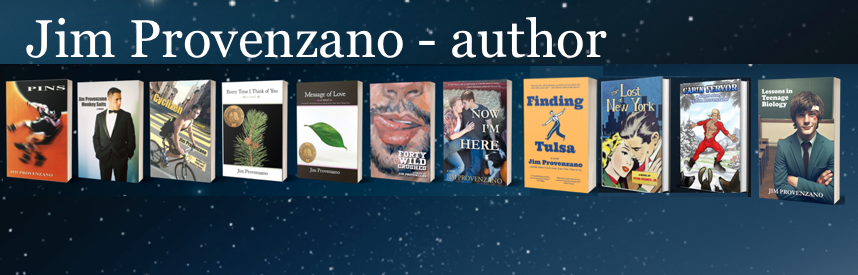
The years that my novel Now I'm Here took place, 1970 and 1980s, are countered by my many return visits home, where the story seemed to be accumulating like slow ivy. The two main characters are Joshua, a piano prodigy, and David a pumpkin farmer.
For piano provenance, proving the years of my musicianship existed, I offer a newly found (see PINS photo/map search above). The piano itself and its location in our home is the dining room. I'd play for hours, but also at the local (then) Ashland College studios, choosing from Yamahas and Steinways.
For farm boy authenticity, sadly I never documented my pumpkin farm experience in any 1981 photos. It was often beautiful amid the labors of hauling truckfull after truckfull for months, but not a camera-ready environment back then. I never even remembered to drive by years later and get an image of the farm house and barn. Now it's all floral greenhouses, as I included in the story.
All I have left are the Red Wing boots I bought for the job, which lasted 40 years. But they're in the basement and you don't need a photo of a pair of boots. You'll have to settle for the 1998 image above.
Showing posts with label young adult LGBT fiction. Show all posts
Sunday, January 13, 2019
Now We're There: mapping time through fictional realities
Sunday, December 1, 2013
Floored
This is a photo of me with author David B. Feinberg at an ACT UP New York meeting at Cooper Union in 1990. Maybe it was 1991, or 1992. I don't remember.
What I do remember is my desire to capture us together while the meeting took place in the historic East Village hall, where the AIDS activism group, having outgrown its weekly space at the LGBT Community Center in the West Village, continued to develop ideas for protests and information-gathering groups in the fight against the AIDS pandemic.
On that early evening, some thought in the back of my mind might have been, "He's going to die some day, and this photo, with the very interesting checkerboard tile pattern, may be one of our only documented moments together."
What I do remember is my desire to capture us together while the meeting took place in the historic East Village hall, where the AIDS activism group, having outgrown its weekly space at the LGBT Community Center in the West Village, continued to develop ideas for protests and information-gathering groups in the fight against the AIDS pandemic.
On that early evening, some thought in the back of my mind might have been, "He's going to die some day, and this photo, with the very interesting checkerboard tile pattern, may be one of our only documented moments together."
Saturday, November 17, 2012
Listen Up
Did I mention there's a playlist to go with PINS?
It works with the novel and the play.
I did have some doubts about making specific references to songs in the script. But if one is going to use, say, Brahms, one doesn't simply say, "insert classical piano here." The specificity of the time the story is set, as well as the tastes of the characters and the songs referenced by name, make it seem plausible.
If a theatre company wants to produce the play, they should follow the descriptions that make it specific to a time and setting. Plus, the music's pretty cool, even if it is a bit, uh, early 90s.
Again, here's a link to the playlist, in case the embedded videos don't load properly.
It works with the novel and the play.
I did have some doubts about making specific references to songs in the script. But if one is going to use, say, Brahms, one doesn't simply say, "insert classical piano here." The specificity of the time the story is set, as well as the tastes of the characters and the songs referenced by name, make it seem plausible.
If a theatre company wants to produce the play, they should follow the descriptions that make it specific to a time and setting. Plus, the music's pretty cool, even if it is a bit, uh, early 90s.
Again, here's a link to the playlist, in case the embedded videos don't load properly.
Friday, September 16, 2011
Straightwashing
The Guardian UK reports on the previously secretive phenomenon of authors, Young Adult writers in particular, being asked to "straightwash" their characters.
Sherwood Smith and Rachel Manija Brown's co-written YA novel, Stranger, includes the viewpoint of Yuki as one of its five main characters. Yuki is gay and has a boyfriend, with whom he does "nothing more explicit" than kissing. Writing in the US trade magazine Publishers Weekly, the two published authors say they were contacted by an agent from a "major" literary agency, who offered to sign them up "on the condition that we make the gay character straight, or else remove his viewpoint and all references to his sexual orientation".Author Jessica Verday experienced a similar problem.
The two authors believe that "forcing all major characters in YA novels into a straight white mould is a widespread, systemic problem which requires long-term, consistent action". They suggest that both editors and agents who are open to novels with lesbian, gay, bisexual and transgender protagonists make this explicit, that readers vote with their pockets and that writers speak out about similar experiences. "How many published novels with a straight white heroine and a lesbian or black or disabled best friend once had those roles reversed, before an agent demanded a change? This does not make for better novels. Nor does it make for a better world. Let's make a better world," they say.
Author Scott Tracey discusses this issue on his blog.
I had agents who said there wasn’t a market for a paranormal with a gay character who had a romance. I had editors suggest they would reconsider the book if Braden and Trey became Brenda and Trey. Or if I removed the romance and made it a straight girl/gay guy buddy comedy.
Now, at the end of the day, my book wound up exactly where it was meant to: at a publishing house that loved the story, and an editor who was super supportive right from the beginning.
And his most important statement: "If you want more books with LGBT content, buy the ones that are already out there. Show publishers that there’s profit to be made by investing in these books."
Subscribe to:
Posts (Atom)


