Showing posts with label wheelchair art. Show all posts

Tuesday, April 14, 2015

Message of Love: Bibliography

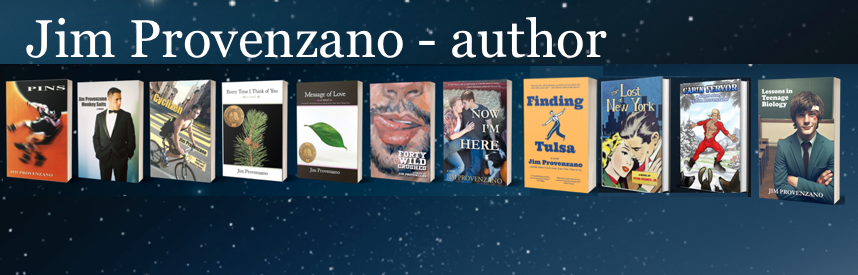
Since I've got a few great group readings with other authors coming up, the next one being in a library, I thought I'd share a list of the nonfiction books that were basically my homework while writing Message of Love, the sequel to Every Time I Think of You.

In the interest of variety, I'll link as many books as I can to Alibris, which features all my books, and is a nice alternative to Amazon.com. Just don't buy the overpriced listed editions. I got most of these books used online, and had fun finding them.


Out & About
For scenery and setting, I enjoyed perusing several travel and nature books.

The Peterson Field Guides for Wildflowers (Roger Tory Peterson, Margaret McKenny, editors) and Eastern Trees (George A. Petrides, Janet Wehr, editors) gave me accurate information about the flora of the area. Living in California makes for a little distance from knowing which kinds of trees and plants Reid would work with in his classes, his job, and elsewhere. They're also the sort of books Reid would use a lot.

Wednesday, October 12, 2011

Wheely Scary


While browsing through my Netflix queue and suggested flicks, I decided to watch an old American International B classic, Die, Monster, Die! starring Boris Karloff, whom I've always admired, and Nick Adams, who, believe it or not, my mother went out with on a date! Fortunately, there wasn't a second date, and she met my dad only a few months later. Anyway, that's another story altogether.

What I noticed about Die, Monster, Die! is of course how Dr. Scott in The Rocky Horror Picture Show (and the musical play original) was probably inspired by Karloff's wheelchair-using character. The plaid blanket is a giveaway, although the ornate chair with gryphon ornature is not appropriated.

I wondered about the varied depictions of characters who use wheelchairs in films.

Bypassing the classics (Coming Home, Born on the Fourth of July, Murderball and the Hitchcock classic Rear Window), and acknowledging the top three (according to Alan Troop on Disaboom), I'll skip to one of my favorites, Monkey Shines, whose image search online led to this page, a whimsical round-up of the Top Ten Wheelchair characters in Horror Films. It's getting near Halloween, so it's worth a gander.

What's clear are the two Vs: Victim or Villain. That's pretty much the binary code, for the most part. Some die violent deaths, others commit heinous monstrous crimes. A few others are -shocker!- not actually disabled! Horror movies usually reduce people to archetypes anyway, so why should disabled people be treated any differently?


I've pretty much watched every single Scott Speedman movie I could get my hands on. Even the worst are sweet, and there are a few clunkers, because Speedman is so durn sexy and cute. He's also a good actor, I think.

Good Neighbors is no exception. An interesting premise, Speedman plays a wheelchair-using neighbor to two other stranger characters who may or may not be a suspect in this darkly comic serial killer thriller. It's definitely one of my least favorite genres, but Scott's in it, so there. Here's a New York Times review. Here's a Fangoria write-up.

I guess the point is proving that characters can be sexy even in wheelchairs, particularly when they're played by Speedman.

Yet there are some stranger scenes in other films, particularly Nightmare on Elm Street 3, in which a wheelchair becomes an instrument of torture, and The Changeling, in which a chair becomes a possessed attacker.

Others depict a perceived horror of becoming disabled, the fear of vulnerability by the disabled, or a fear of the disabled. In many films, it's a myopic depiction.

While Karloff's evil in Die is blended into lots of other creepy stuff, and his handicap is incidental, Monkey Shines remains a favorite for several reasons.

- Jason Beghe is gorgeous, and frequently naked.
- Despite some melodrama, and a hokey ending, it's a good story.
- The difficulties of disability, including romantic expectations and betrayal, are shown thoroughly and believably.
- Monkeys are creepy.
- Have I mentioned how gorgeous Jason Beghe is?

But probably the biggest horror that Beghe overcame is that he recently told how he finally escaped the cult, excuse me, "religion" of Scientology.

See more features about disability in films at Disaboom.
Thursday, July 14, 2011

Faux Wheel


Decades ago, Bette Midler performed a section of her wonderful touring stage show as Dolores Lelago. She performed as a character who is a wheelchair user, who also performs campy numbers in a mermaid costume.

Lady Gaga, the master appropriator of pop culture images, provides a vague homage to Bette in one of her concert costumes, performing in a wheelchair as a mermaid; all in black.


Yet, unlike Bette, Gaga's constant sincerity and infrequent admission of her inspirations (Madonna, Bruce Springsteen) leaves a few confused about her inclusion of a wheelchair as a mere prop, not an integral part of her act, as Midler did for years. A few disability rights groups were not pleased.

Here's a little deconstructive analysis from the wonderful Bootleg Betty site. they also posted a great pic with Midler's funny Tweet: "I’m not sure @ ladygaga knows that I’ve performed my mermaid in a wheelchair for millions of people — and many of them are still alive."

Also, from the website Beauty Ability, comments by its wheelchair-using editor Tiffany Carlson offer a different perspective. Gaga has frequently used disability as a character motif in her videos and stage shows. She's even hired differently-abled dancers in some of her stage acts, and calls her wheelchair-using fans her "Little Rolling Monsters."

I imagine Gaga gets to see those fans when they get seated at concerts close to the stage. Who knows?

UPDATE: People at a recent concert threw eggs onstage during Gag's wheelchair number. Wow.

Obviously, there's a clear line between portraying a handicapped person onstage and being a handicapped performer.

I'm wondering about the responses to 'Every Time I Think of You' from wheelchair users. Will gay people think it's not representative of them? Most of the handicapped people I know are nothing at all like my character Everett.

Will straight people ignore or dismiss it as being too gay? Does the fact that the love interest, and not the narrator, becomes a wheelchair user give me some slack from accusations of misrepresenting?

Perhaps if I were to be a fraud like "JT Leroy" or other lying memoir "authors," I should be concerned. But even some circles resent it when a writer creates fiction that is far removed from his/her life, mostly with issue of race and gender. It should be interesting to see the responses.