Wednesday, October 5, 2022

'Now I'm Here' - prize pumpkins and fall fiction


October is underway and that means it's time for pumpkins! 

I'm not just talking about pumpkin spice and all its stereotypical memes and humor, 

but the actual gourds that I go crazy for. 

Allow me to explain how my love of pumpkins stems (pun!)  

from working on a pumpkin farm and led to help developing my sixth novel,

 ‘Now I'm Here.’


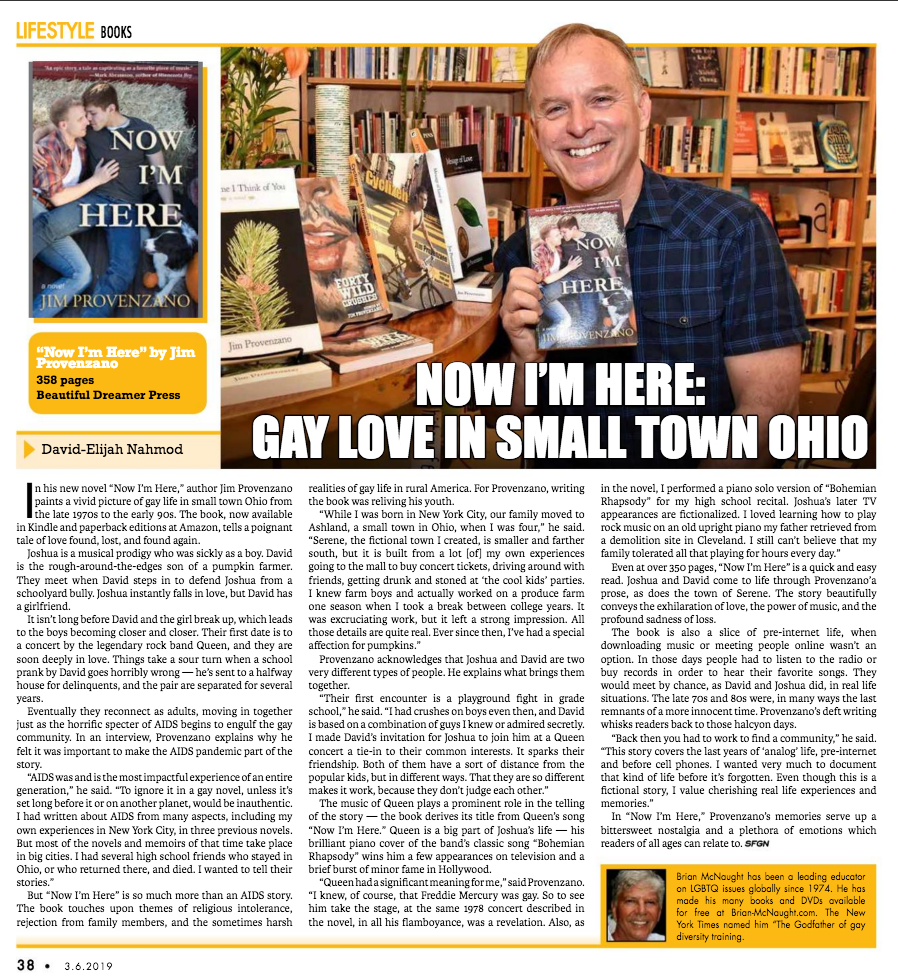
As you may recall, in 2018 the novel was published by Beautiful Dreamer Press

Now I'm Here’ involves Joshua, a piano prodigy, who becomes a little 

bit famous by playing a piano solo of Queen’s “Bohemian Rhapsody.” 

He falls for a brooding rough boy in his school, David, 

who works on his dad's pumpkin farm.


I sat on this novel for years as it was incomplete. 

I didn't know what else to do with David, the second character 

in the book. But at one time I put together a short story, 

actually more of a novella, barely fictionalizing my own experience 

working on a small Ohio pumpkin farm 

through the fall of 1981 when I was in between colleges. 


I dropped out of Kent State in the theater department and had yet to 

figure out what to do. I would eventually switch to dance and 

continued studies at Ohio State. But that one Autumn was a pivotal time. 

It wasn't very enjoyable at the time but looking back I turned it into 

a dramatic long short story called “Tractor Pull.”


Part of my job,  along with picking produce and packing it into crates 

in a truck on a weekly basis, was selling produce on a roadside stand and 

at shopping malls around my hometown. We were up against big 

agribusiness produce in grocery stores, selling similar produce. 

But some people still like the homegrown stuff. 

In a way that compares to supporting an independent small presses and authors.


Do you want fresh organic produce sold by one person or are you 

going to buy from a corporation at a supermarket?


outtake from the cover photo shoot


You can read that version in my short story collection, ‘Forty Wild Crushes.’ 

But then I expanded the story into multiple chapters for David's adventures 

and experiences, working for his abusive father but then also escaping the farm. 

He later inherits it and he and Joshua live on the farm together.


But what is it about pumpkins that is so fascinating, aside from the 

beautiful colors? Well, they're Hardy and they represent the harvest 

in autumn in most American cultures. I’m not sure about European cultures.


Did you know that if you don't carve a pumpkin it can last for months? 

I discovered this when I saved some pumpkin –small and large ones– 

from the fall of 2017 and eventually used them for the photo shoot of the 

book cover for ‘Now I'm Here.’


Since then I haven't really carved pumpkins so much as just display them 

and buy them and occasionally cook them. More recently, after finishing 

fixing up my bicycle that had been sitting in my basement for a few too 

many weeks, the first place I rode to was the SoMa Trader Joe’s for their 

variety of pumpkin flavor treats from snacks; cookies, ice cream and bread.


So pumpkins end up having the kind of pivotal seed if you will to the story line, 

particularly towards the end.


I’m also giving a nod to this book because although it came out four years ago 

I’m still hoping to find new readers. At my day job at the Bay Area Reporter  

I receive dozens of press releases for really high quality LGBTQ novels 

and memoirs. It seems like a lot of people got work done during the pandemic. 

I work hard to get as many as possible assigned for reviews. 

But there simply isn’t room for all of them. 

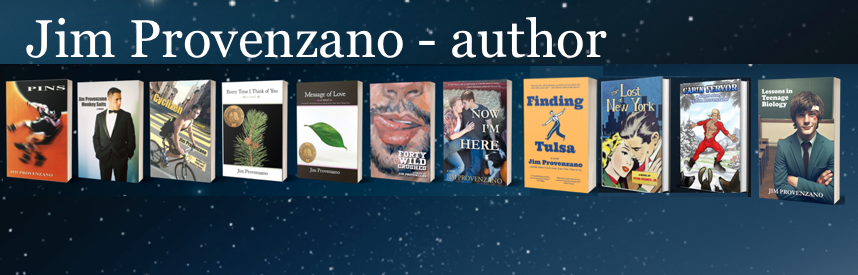
My own seventh novel, ‘Finding Tulsa, kind of got lost in the shuffle in 2020 as well.


It’s been a very difficult time getting small press books to see any attention, 

especially after they've been out for a few years. But I think of them as like 

pumpkins; if they're not damaged, they do end up having a long shelf life.


You’re welcome to add reviews to any of the books you may have read. 

That's what keeps literature going, finding new readers. 

So heat up your pumpkin spice treats with a nice cuppa, 

and post your own harvest of reviews.


Saturday, September 17, 2022

Censoring LGBTQ books is stupid, wrong, and downright evil.


Bookshelf at Books a Million, Rapid City SD

Read any banned books lately? The list of literary works under attack by right wing idiots continues to expand. But the stupid thing is of course that the more that they try to suppress these books, the more people are curious to read them. And people, particularly librarians, are fighting back.

 It all comes at an odd time while we’re allegedly under a Democratic presidential administration. But bitter right-wingers still worshiping their deposed king Trump continue to infiltrate school boards, library staffs and find other ways to suppress literary works, some of them Pulitzer Prize winners.


As NBC News reports, “nationwide, school districts have been bombarded by conservative activists and parents over the past year demanding that books with sexual references or that discuss racial conflict, often by authors of color or those who are LGBTQ, be purged from campuses. Those demands have slowly moved toward public libraries in recent months.  

Many conservative activists have referred to people who defend the books as “groomers,” comparing them to child molesters. The Proud Boys, an extremist hate group, has barged into LGBTQ-themed reading events in several libraries, insisting they need to protect children. Some librarians have said they no longer feel safe serving in their roles.”

Richard Thomas in the stage adaptation of 'To Kill a Mockingbird'

Locally, as a touring production of the stage adaptation of To Kill a Mockingbird runs here in San Francisco (presented by BroadwaySF), local librarians and the play’s production team, led by playwright Aaron Sorkin, are working together to get books in the hands of kids, particularly copies of To Kill a Mockingbird, one of the most contested literary works of the age (SF Chronicle).

As Reason reports, censoring Mockingbird is an epic fail. "Despite decades of censorship attempts in the public sector, the private sector has met consumer demand for the book. More than 40 million copies have been sold worldwide."

This all relates to the attacks on Critical Race Theory, or, basically, factual accounts of racism in American history. Right-wingers are determined to rewrite history to make it seem like white oppressors were the good guys. Some are so extreme that they're banning books that aren't even on shelves.

Sunday, April 17, 2022

'The Lost of New York,' a novel by John Rigney, Jr. - how a hidden manuscript became a novel 70 years later


Hidden away for more than half a century, my late uncle’s novel,

The Lost of New York,  is finally a book (May 6, 2022).

So, why did I task myself with the arduous process of converting a faded stack of chapters into an actual book? Mostly because it fascinated me. I also felt a sense of familial loyalty, seeing as my late uncle, John “Butch” Rigney, Jr., preceded me as the first writer in the family, albeit unpublished. His hand-typed writing made its way across country –twice– before being published. The gritty and sad urban tale, set in early 1960s Bronx, New York, may be unfinished, but is a captivating time capsule.

It’s also a revealing roman a clef of Butch’s own life, cut too short in 1967.

 from the novel’s Introduction:

John “Butch” Rigney wanted to be a writer.

Stories remain amusing about his young life, growing up with a brother, Maureen, and brother, Kevin. His two sometimes abusive often drunk parents, helped him become what his sister called “a throw-away kid. Nobody ever gave him a chance, helped him out.”

John "Butch" Rigney, Jr.

As a youth, Butch went in and out of a series of reform schools for stealing, and jumping in a river from the Teufelberg Bridge, named after the Dutch Devil’s Mountain.

His brother was also a petty thief,
robbing a neighborhood diner.

In the early 1960s, Butch also served in the Air Force, possibly as a bargain for another jail sentence. He was stationed in Anchorage, and got out with an honorable discharge

A letter was sent to his mother –Mrs. John M. Rigney- mistakenly presumed to be his wife, of a package of papers that were left at McGuire Air Force Base in New Jersey.

The early writings of Rigney are dated 1963. These “papers” may have been his early drafts of short stories (not in this edition), perhaps the letter and scant scribbled notes. A few of the short stories are signed D.Cno. with J.M. Rigney as the mailing name.

Saturday, March 19, 2022

Artists fight back for Ukraine; what would you do?


When someone posted on Twitter asking how artists, specifically fiction writers, could continue to create while bad things happen in the world, the responses were numerous. While I haven't been flooded with the creative spark recently, I have done some work, and thought I'd share a few of the many things artists around the world, and in Ukraine, are doing to protest the heinous Russian invasion of Ukraine.

Via France's Observer: metal sculptors have made barricades on roads, soldered from girders. 

'Everyone is doing what they can to defend our city, our country'

Russia invaded Ukraine on February 24, beginning a war that, to some Ukrainians, felt improbable until the first explosions went off. The resistance effort was immediate. 

On February 25, Ukrainian President Volodymyr Zelensky urged citizens across the country to mobilize against Russia’s full-scale invasion. Thousands of people lined up to enlist in the military.

Meanwhile, everyday citizens were told to take up arms to defend their cities. The Ukrainian defence ministry encouraged residents of a Kyiv suburb to “make Molotov cocktails” and “destroy the occupier.”

Analysts say the Russian military may have been caught off guard by Ukraine’s strong resistance. Bodia said that everyone has become involved in the war effort.

 Journalists are also stepping beyond 'objective' lines, as The Guardian reports:


Marina Ovsyannikova, an editor at Channel One, burst on to the set of the live broadcast of the nightly news on Monday evening, shouting: “Stop the war. No to war.”

She also held a sign saying: “Don’t believe the propaganda. They’re lying to you here.” It was signed in English: “Russians against the war.”

The news anchor continued to read from her teleprompter speaking louder in an attempt to drown out Ovsyannikova, but her protest could be seen and heard for several seconds before the channel switched to a recorded segment.

Ovsyannikova also released a pre-recorded video via the OVD-Info human rights group in which she expressed her shame at working for Channel One and spreading “Kremlin propaganda.”

“Regrettably, for a number of years, I worked on Channel One and worked on Kremlin propaganda, I am very ashamed of this right now. Ashamed that I was allowed to tell lies from the television screen. Ashamed that I allowed the zombification of the Russian people. We were silent in 2014 when this was just beginning. We did not go out to protest when the Kremlin poisoned [opposition leader Alexei] Navalny,” she said.

“We are just silently watching this anti-human regime. And now the whole world has turned away from us and the next 10 generations won’t be able to clean themselves from the shame of this fratricidal war.”