Friday, October 16, 2015

Query Books - Kickstarting a New Small Press


Check out my one-minute stop-motion love letter to LGBT literature made to help Query Books' Kickstarter campaign! They'll be republishing out-of-print books by renowned authors.
Query Books, started by Ken White, a book industry professional and former manager at San Francisco's Books Inc. in the Castro, has revealed his plans to start a small press focusing on out-of-print books by notable gay authors.

Query Books-Jim Provenzano from Ken White on Vimeo.

Among the rewards for supporters are print and ebook editions of their first project, James Broughton's Coming Unbuttoned

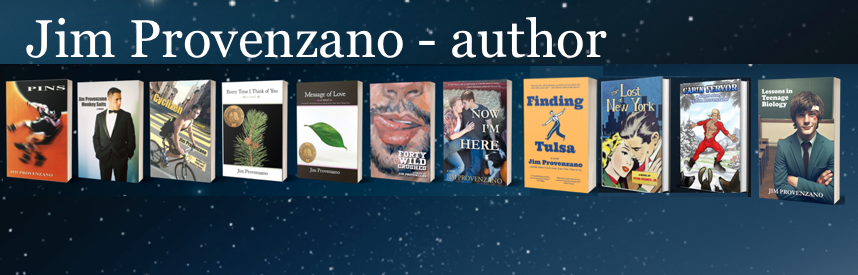
It was great fun sorting through my current book collection, and spending an afternoon taking pictures for this little clip. The first draft was about six minutes long, so I just edited and sped up a few sections. 

While I am an obsessive book collector, specifically of LGBT literature and nonfiction, over the years I've given away so many more books that weren't in my home when I shot this. But still, I hope it entertains and inspires.

Donate what you can, and support queer lit!

Wednesday, October 14, 2015

Looking Good: Beauty Standards & Disability

Who deserves to be visualized in media when discussing disability? It's well known that attractive people are treated better by others.  And when you think of the term 'model,' you think of beautiful men and women. 

While contemplating the visuals for my last two novels, I spent days searching stock image licensing companies to find imagery that would represent the two main characters in both Every Time I Think of You and its sequel Message of Love.

And I failed.

I failed because I didn't settle for what was available, because the images for rent did not include young men who resemble the main characters, in particular, Everett Forrester.  Stock images of wheelchair users, are kind of stupid, as this snarky yet accurate AutoStraddle listicle shows.

British trainer Jack Ayers
Most stock image companies portray disabled people -specifically wheelchair users- as either frail, in a hospital, alone, or conversely, as super athletic.

An exception is PhotoAbility, which has a more diverse array of images, but none of their images include two men together that could even slightly be implied as gay.

Also, as I've written before, I did not want to specifically 'brand' the books as disabled-inclusive, or specific. I never shied away from mentioning it as part of the story. I simply thought that the nature field guide look of the two covers was more metaphoric, while referencing an actual part of the story, Reid's love and study of nature.

Tuesday, September 29, 2015

Past Deadlines: Journalism and/or Fiction

Mark Segal, Jim Provenzano at NLGJA 2015
Don't quit your day job, the general advice goes for aspiring authors. And I've mostly taken that to heart. Because I've found that having regular deadlines for work writing helps with personal deadlines for your book writing. But since I've been more than a month in finishing this blog post, I'll err on the side on inconsistency. I've been busy doing a lot more writing!

The back story: a month ago, I moderated a panel at the National Gay & Lesbian Journalists Association's LGBT Media Summit. the organization holds annual conferences, and celebrated 25 years over Labor Day Weekend. 

While my membership and attendance have been spotty (I mostly have attended when it was local, or nearby), I did attend the first convention, held in San Francisco. Those were different times, journalistically speaking. 

From the now antiquated technical issues of sending stories (floppy discs, faxes!) to the expansion, and now reduction of LGBT media, I was lucky enough to have a variety of freelance jobs, and an evolving job with the Bay Area Reporter since I moved to San Francisco 25 years ago.

Saturday, August 8, 2015

Stonewall: Getting History Right, and Wrong

Used with permission of the Estate of Fred W. McDarrah, All rights reserved © 2015
Outside the Stonewall Inn, June 1969.
Used with permission of the Estate of
Fred W. McDarrah,
All rights reserved © 2015
The new film Stonewall has become the object of ridicule and preemptive boycotts over claims of misrepresentation of the pivotal riots in June 1969 that are credited with unleashing the civil rights movement for homosexuals. But that story in itself varies, and some harsh critiques have quickly become strident and shortsighted.

As an author and journalist who has balanced facts and fiction for nearly three decades, with a mostly gay focus, it's been fascinating, and distressing, to see this near sacred event turned upside down to fit differing agendas, all based on a two-minute trailer.

First, some facts. The Stonewall riots emerged when drag queens, gay men, some white, some Black, some Latino, and some simply self-proclaimed 'queens,' were harassed by New York City cops as yet another raid on the small gay bar in Sheridan Square faced more harassing intimidation. People refused to get into paddy wagons, and violent reactions ensued.